Alteration of body representation in typical and atypical motor development
Summary
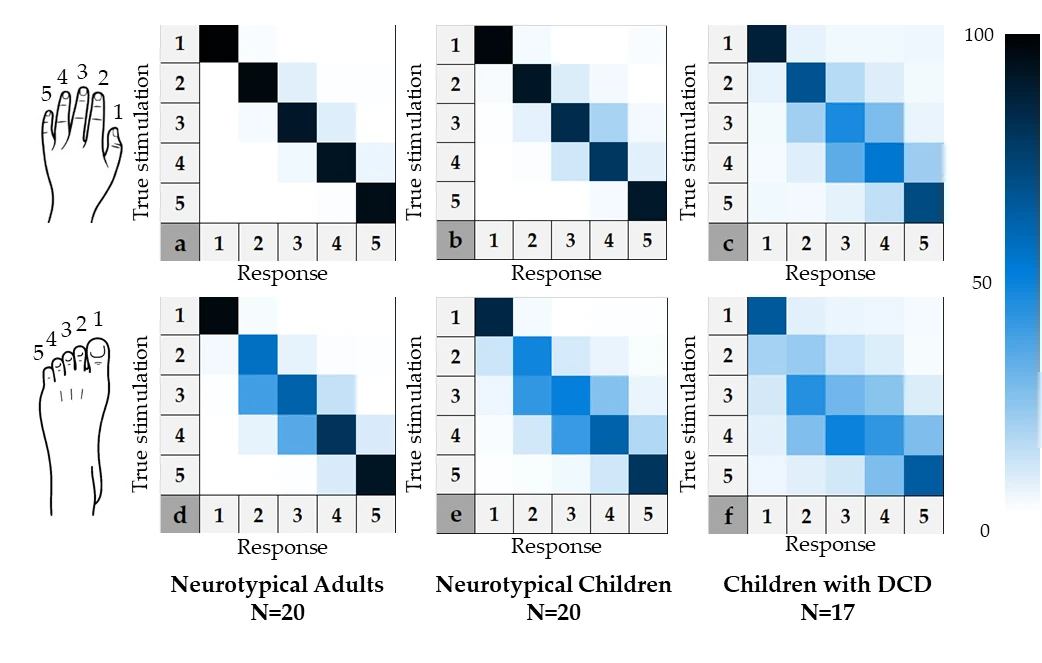
Children with developmental coordination disorder localized touch on their fingers and toes less accurately than neurotypical peers. During a cued finger-lifting task, they also made larger unintended movements of other fingers. Sensory accuracy and unintended movement were related across tasks.